
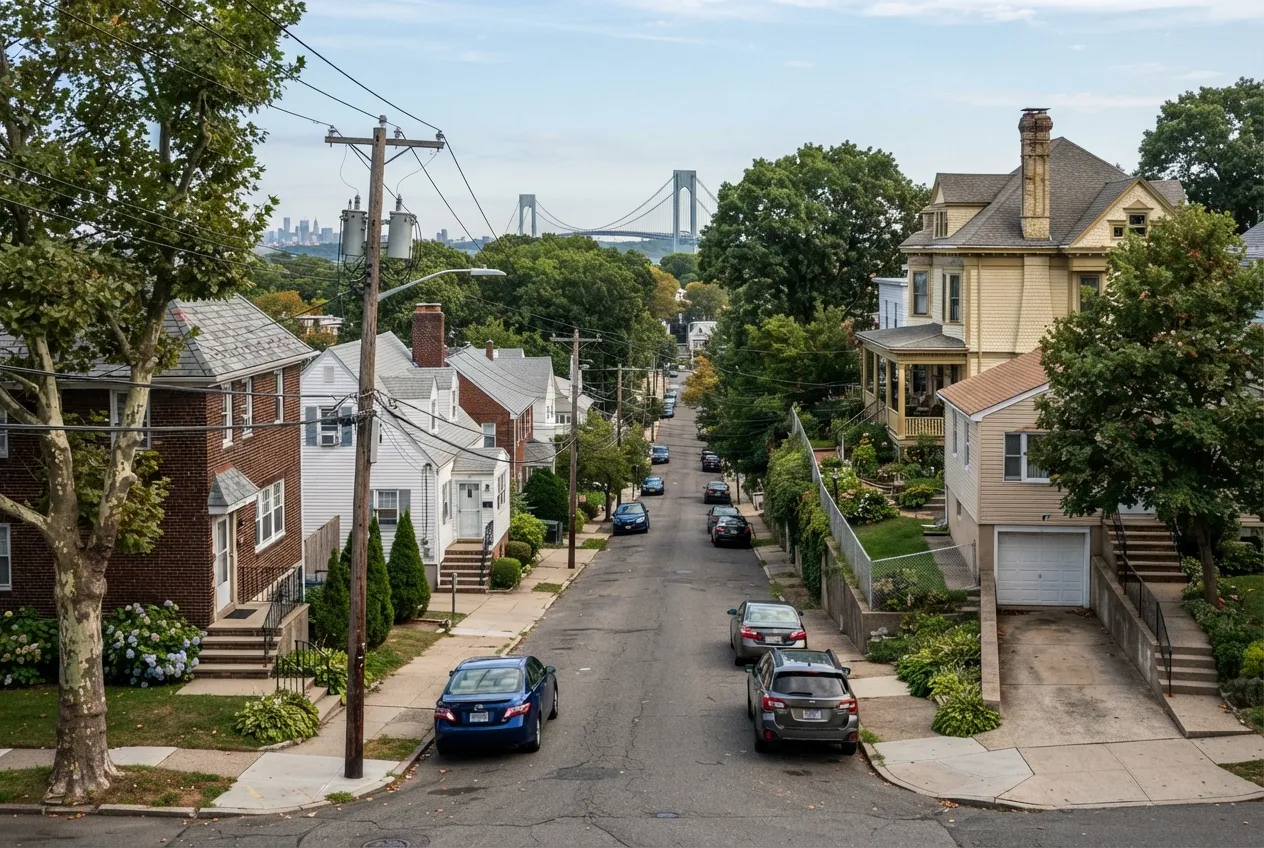
The short answer
Yes, CrestFlue Chimney Service serves Lighthouse Hill (10304) with chimney sweeping, inspections, repairs, liners, and air duct and dryer vent cleaning. Hillside exposure, mature trees and freeze-thaw winters are hard on chimneys here, so a yearly inspection is the best way to catch problems early.
Lighthouse Hill sits in the 10304 ZIP code on Staten Island, about six miles northeast of our office, and CrestFlue Chimney Service works on homes here throughout the year. The neighborhood is mostly detached houses on sloped, tree-covered lots. Many have masonry chimneys, fireplaces and boilers that have been in service a long time. Our certified technicians handle chimney sweeping, inspections, repairs, liners, caps, waterproofing, and air duct and dryer vent cleaning. We explain what we find in plain terms before any work begins.
Chimney Problems Common on Lighthouse Hill
Homes on Lighthouse Hill sit on higher ground among a lot of mature trees, and both shape how chimneys age. Exposed stacks take wind-driven rain from coastal storms and nor'easters. Overhanging branches drop leaves and twigs into open flues and give squirrels and birds an easy way in.
Staten Island winters bring repeated freeze-thaw cycles. Water that soaks into brick, mortar joints or a cracked crown expands when it freezes. Over a few seasons that turns into spalled brick, loose mortar, and leaks that show up as stains on a ceiling or wall near the chimney. Humid summers cause a different problem: damp masonry and creosote can give off a strong odor in the house even when the fireplace isn't in use.
Our repair work covers each of these problems. That includes repointing and crown repair, new caps, waterproofing treatments made for masonry, damper replacement, and chimney rebuilding when the structure is too far gone to patch.
- Cracked or crumbling chimney crowns that let water into the masonry
- Missing or rusted caps and chase covers that let in rain, debris and animals
- Loose or eroded mortar joints, especially on the side facing the weather
- Damper and firebox wear in fireplaces used every winter
- Leaning or badly deteriorated stacks that may need partial or full rebuilding
Yearly Chimney Inspections and Sweeping
The NFPA 211 standard calls for chimneys, fireplaces and vents to be inspected once a year. That applies whether you burn wood every weekend or only run a gas or oil boiler. A sweep removes creosote and soot. The inspection tells you whether the flue, liner and masonry are safe to keep using.
Chimney professionals use three inspection levels:
If you're buying or selling a house in 10304, ask for a Level 2 inspection so both sides know the chimney's condition before closing.
- Level 1: the standard yearly check when nothing about the system has changed.
- Level 2: needed when the system changes, such as a new appliance or a switch of fuel, or when the home is being sold.
- Level 3: used when a hidden hazard has to be reached by opening part of the chimney or the building.
Oil-to-Gas Conversions and Chimney Liners
Many older Staten Island houses were built around oil heat. When a New York City building converts its boiler from oil to gas, the chimney has to be evaluated as part of the work. A new liner is often needed because gas exhaust produces acidic condensate that can corrode a masonry flue from the inside.
We inspect the existing flue and tell you whether it can be used as is. If it can't, we install a properly sized liner. If you're planning a conversion, bring us in early so the chimney work lines up with your heating contractor's schedule.
Air Duct and Dryer Vent Cleaning
According to the U.S. Fire Administration, failure to clean is the leading factor contributing to clothes dryer fires in homes. Long vent runs, crushed foil ducts and lint-clogged exterior hoods are common reasons a dryer takes too long. We clean the full run and check the exterior termination.
For air ducts, we follow the U.S. EPA's guidance. Cleaning makes sense when there is substantial visible mold growth, vermin, or excessive dust and debris. The EPA also notes that duct cleaning hasn't been shown to prevent health problems, so we won't promise that it will. We look first and tell you honestly whether cleaning is worth it. The EPA advises researching the process before responding to very cheap advertised offers and being careful with chemical treatments. We only suggest those treatments when there is a specific reason.
When to Schedule in Lighthouse Hill
Late spring and summer are the easiest times to book sweeps, inspections and masonry repairs, because mortar and waterproofing work need dry, mild weather. By early fall, many homeowners are trying to get on the schedule at once.
If you own a multi-family building or rent out a unit, keep in mind that New York City's heat season runs from October 1 through May 31. During that time, owners must keep apartments heated to the city's minimum temperatures. A flue problem found in November can leave you scrambling, so book an inspection before October.
Beyond Lighthouse Hill, we also serve New Springville, Willowbrook, Great Kills, Eltingville and Arden Heights.
ZIP codes we serve
- 10304