
The short answer
Yes, CrestFlue serves Charleston, Staten Island (ZIP 10307), about 2 miles from our office. We sweep, inspect and repair chimneys, install liners, waterproof masonry, and clean dryer vents and air ducts for homes throughout the neighborhood.
CrestFlue Chimney Service works throughout Charleston, Staten Island, in ZIP code 10307, about 2 miles south of our office. Because the drive is short, scheduling a sweep, inspection or repair here usually comes together quickly. Our certified technicians handle chimneys, fireplaces, liners, dryer vents and air ducts for the detached houses, semi-attached homes and townhouses found across the neighborhood. That includes systems venting a wood-burning fireplace, a gas insert, a furnace or a boiler.
Service for the Homes in Charleston
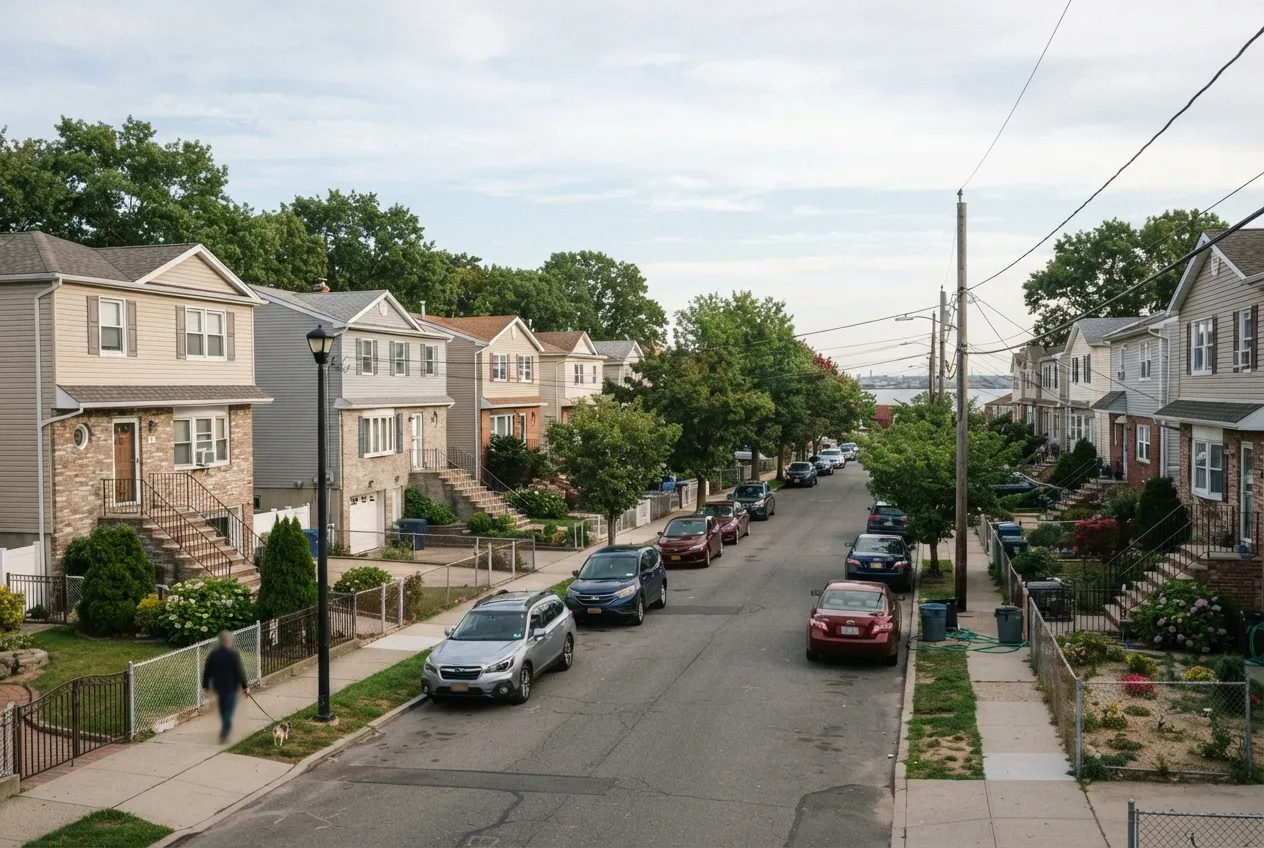
Charleston's housing is mostly detached and semi-attached homes, along with townhouse rows. Some have traditional masonry chimneys serving a fireplace and a heating appliance. Others have factory-built fireplaces with metal flues enclosed in a framed chase on the roof. Each type wears differently. Masonry needs attention to mortar, crowns and flue tiles. Prefabricated systems depend on a sound chase cover and correctly fitted components.
Whatever you have, we look at the full system, from the firebox or appliance connection up to the cap. Then we explain what we found in plain terms.
- Chimney sweep and chimney inspection
- Chimney repair and chimney rebuilding
- Chimney liner installation
- Chimney cap and chase cover
- Chimney waterproofing
- Fireplace and damper repair
- Dryer vent cleaning and air duct cleaning
How South Shore Weather Affects Your Chimney
Charleston sits on Staten Island's south shore, where coastal weather is hard on chimneys. Nor'easters drive rain sideways into brick and mortar. Winter temperatures swing above and below freezing, so trapped water expands and gradually cracks crowns, spalls brick faces and loosens joints. Salt in the air speeds up rust on steel chase covers, caps and dampers.
Humid summers create their own problem. Moisture mixing with creosote in an unused flue often causes a sour smell indoors. A properly sized cap, a sealed crown and a breathable masonry water repellent keep much of that water out. Replacing a rusted chase cover before it lets water into the framing is far simpler than fixing the rot afterward.
Yearly Inspections and Heat Season Timing
The NFPA 211 standard calls for chimneys, fireplaces and vents to be inspected once a year. A Level 1 inspection fits when nothing has changed. A Level 2 is used when you install a new appliance, switch fuels, or buy or sell a home. A Level 3 applies when a suspected hidden hazard can only be reached by opening part of the chimney or building.
New York City's heat season runs from October 1 through May 31. If you rent out part of a two-family home, you must keep the unit heated to the city's minimums during that period. Booking your inspection and any repairs in late summer or early fall helps keep your boiler or furnace venting safely before cold weather arrives.
Oil-to-Gas Conversions and Chimney Liners
Many Staten Island homes have moved from oil heat to gas. In New York City, the chimney has to be evaluated as part of that conversion. A new liner is often needed because gas exhaust produces acidic condensate that can eat away at an old masonry flue. We inspect the existing flue, recommend a liner when one is called for, and size it to the appliance it will serve.
Dryer Vents and Air Ducts
According to the U.S. Fire Administration, failure to clean is the leading factor contributing to clothes dryer fires in homes. Long vent runs, crushed foil transition hoses and clogged exterior hoods are common, and each one slows airflow. Cleaning the full run and checking the termination keeps lint from building up.
For air ducts, we follow the U.S. EPA's guidance. Cleaning makes sense when there is substantial visible mold, signs of vermin, or excessive dust and debris. The EPA notes that duct cleaning has not been shown to prevent health problems, so we won't promise that it will. We also don't push chemical treatments, and we're glad to walk you through our process before you book.
Nearby Neighborhoods We Serve
Along with Charleston, we regularly work in Tottenville, Annadale, Huguenot, Prince's Bay and Woodrow. These South Shore neighborhoods share the same coastal weather, so the same moisture and freeze-thaw concerns apply to chimneys throughout the area.
ZIP codes we serve
- 10307
Services in Charleston
- Chimney Sweep in CharlestonLocal service & repairs
- Chimney Inspection in CharlestonLocal service & repairs
- Chimney Repair in CharlestonLocal service & repairs
- Air Duct Cleaning in CharlestonLocal service & repairs
- Chimney Liner Installation in CharlestonLocal service & repairs