The short answer
A chimney cap keeps rain, animals and debris out of the flue, and a chase cover seals the top of a framed chimney so water can't soak the structure underneath. If you notice water in the firebox, animal noises, or rust and staining near the top of the chimney, have the cap or cover inspected and replaced if needed.
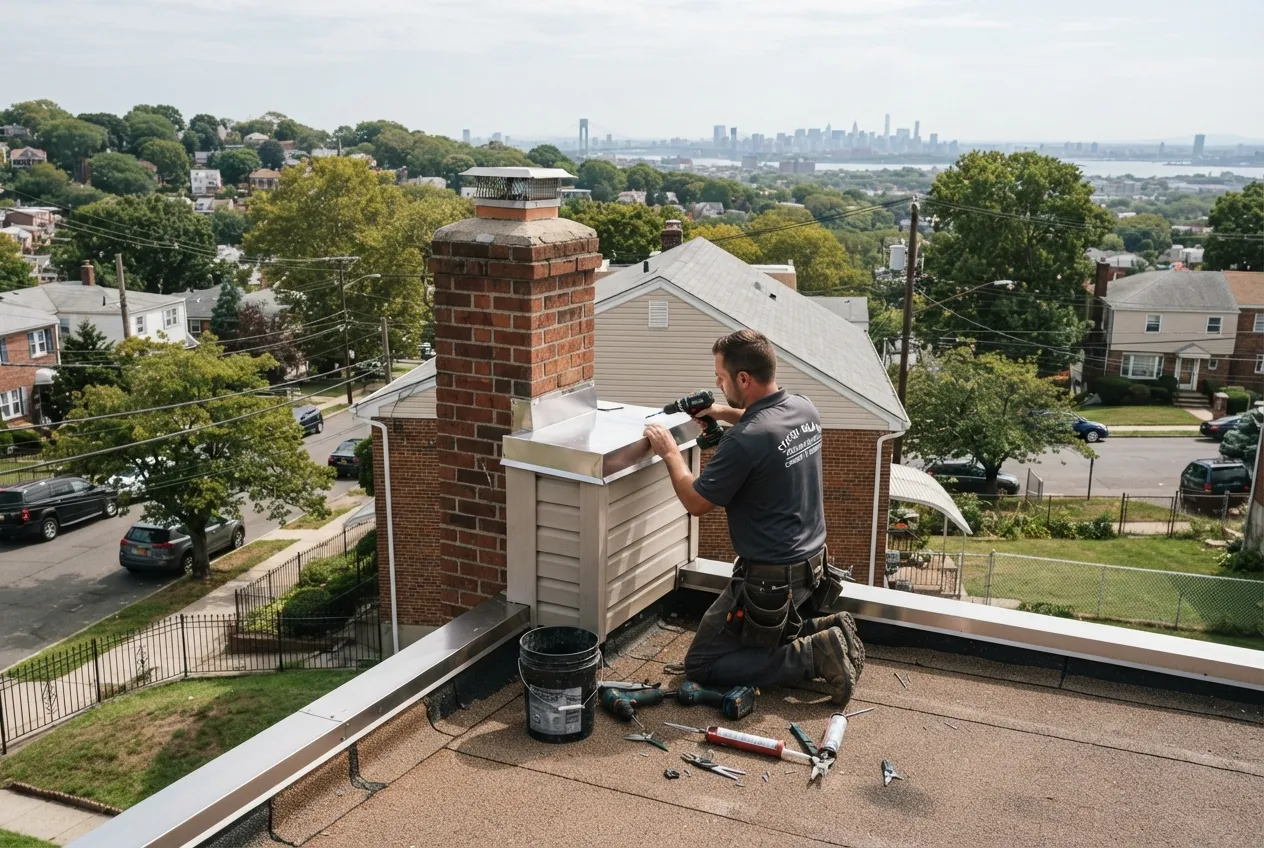
The top of your chimney takes more weather than almost any other part of your house. A chimney cap covers the flue opening. A chase cover seals the top of a framed or sided chimney, common on homes with factory-built fireplaces. When either one is missing, rusted or the wrong size, rain, animals and debris can get into the flue. CrestFlue Chimney Service measures, fits and installs caps and chase covers for homeowners in Staten Island and nearby areas. Our certified technicians check the flue below before anything is sealed up.
Signs you need it
Most cap and chase cover problems show up inside the house first. Water and animals are the two big clues. A damp flue also tends to bring out odors you may not have noticed before.
If you see any of the following, it's worth having someone look at the top of your chimney:
- Water in the firebox, or a damp, musty smell after rain
- A smoke or creosote smell that gets stronger in humid or wet weather
- Scratching, chirping or fluttering sounds inside the chimney
- Leaves, twigs, nesting material or brick flakes landing in the firebox
- White staining on the brick, a sign that water is moving through the masonry
- Poor draft or smoke rolling into the room, which can mean a nest or debris is blocking the flue
- Rust streaks running down the siding below a metal chase cover, or a cover that sags and holds standing water
What's included
Every cap or chase cover job covers the same core work, so you know what you're getting before we go up the ladder.
- Measurement of each flue and the chimney crown or chase top for a correct fit
- A chimney cap with a mesh screen sized for your flue and appliance type
- A chase cover cut to your chase dimensions, with a sloped or cross-broken top so water runs off
- Removal of the old cap or cover, plus any nest material and loose debris at the top of the flue
- A camera look down the flue where water or animal entry is suspected
- Secure fastening and sealing at the crown or chase
- Photos of the finished work and a plain-language note on anything else we found
How our crew works in your home and on the roof
Most of this job happens on the roof, but we usually need to reach the fireplace or appliance too. Inside, we lay drop cloths from the door to the firebox and seal the fireplace opening. HEPA vacuums catch the soot and dust we stir up.
If there's a nest or heavy buildup in the flue, we clear it with rotary brushes before the new cap goes on. Sealing debris inside a chimney only causes a draft problem later. Where it helps, we run a camera down the flue to check the liner and joints for water damage or gaps.
On the roof, we set ladders and roof protection carefully and work around shingles and flashing. We confirm the cap or chase cover fits squarely and is fastened tight enough to hold up in wind and storms. Before we leave, we clean up the work area inside and out.
The standard we follow
The NFPA 211 standard calls for chimneys, fireplaces and vents to be inspected once a year. A new cap or chase cover is a good time to make sure that inspection is current.
Chimney professionals use three inspection levels. Level 1 applies when nothing about the system has changed. Level 2 applies when the system changes, such as a new appliance or a switch of fuel, or when the home is sold. Level 3 applies when a hidden hazard has to be reached by opening part of the chimney or building. Most cap and chase cover visits fall under Level 1, but we'll tell you if what we find points to a higher level.
Fuel type matters here too. When a New York City building converts its boiler from oil to gas, the chimney has to be evaluated as part of the work. A new liner is often needed because gas exhaust produces acidic condensate that can corrode a masonry flue. In that case, the cap has to suit the new liner and appliance.
What affects the price
We give you a quote after we see the chimney, because no two roofs are alike. The main factors are:
- Chimney height and how easy it is to reach the roof safely
- Fuel type: wood, gas or oil, which affects the cap style and screen required
- Flue size and number of flues, including whether you need a single-flue cap or one that covers the whole crown
- Chase dimensions for a custom-cut chase cover
- Condition of the flue, crown or chase top underneath
- How much nest material, creosote or debris has to be cleared first
- Whether a camera inspection or repairs such as crown sealing or liner work are needed
How a visit works
First, we ask what you've noticed, such as water, noises or smells, and look at the fireplace or appliance from inside. Next, we protect the room and go up to measure the chimney top and check the existing cap or cover.
Then we show you photos and explain what we recommend and why. If you approve, we remove the old part, clear any debris, install the new cap or chase cover and seal it in place. If we can't fit a custom part the same day, we schedule a return visit.
We finish by cleaning up and walking you through the photos. We'll also tell you about anything that should be handled before you use the fireplace again. If your home relies on the chimney for heat, it's smart to book before New York City's heat season starts on October 1.