
The short answer
Dryer vent cleaning removes the lint that builds up inside the duct between your dryer and the outside of your home. Schedule it when drying times get longer, the laundry room runs hot, or lint collects around the outside vent. The U.S. Fire Administration identifies failure to clean as the leading factor contributing to home dryer fires.
Every load of laundry pushes lint into the duct that carries hot, moist air from your dryer to the outside of the house. Most of it makes it out, but some stays behind. Over months, lint coats the inside of the duct, gathers at bends and joints, and packs around the exterior hood. CrestFlue Chimney Service cleans dryer vents for homeowners in Staten Island and nearby communities. That includes short runs straight out a basement wall and long ducts that climb through the house to a roof cap. Our certified technicians clear the full length of the vent, check how it is put together, and show you what came out. Below is what to watch for, what the work includes, and how a visit goes.
Signs you need it
A clogged dryer vent rarely announces itself all at once. The signs build slowly, and many people blame the dryer before they think about the duct behind it. If you notice any of the following, the vent is worth a look.
- Clothes need two cycles, or towels come out damp at the seams after a full cycle.
- The dryer cabinet, the laundry room or the clothes themselves feel hotter than they used to.
- A burning or scorched smell when the dryer runs.
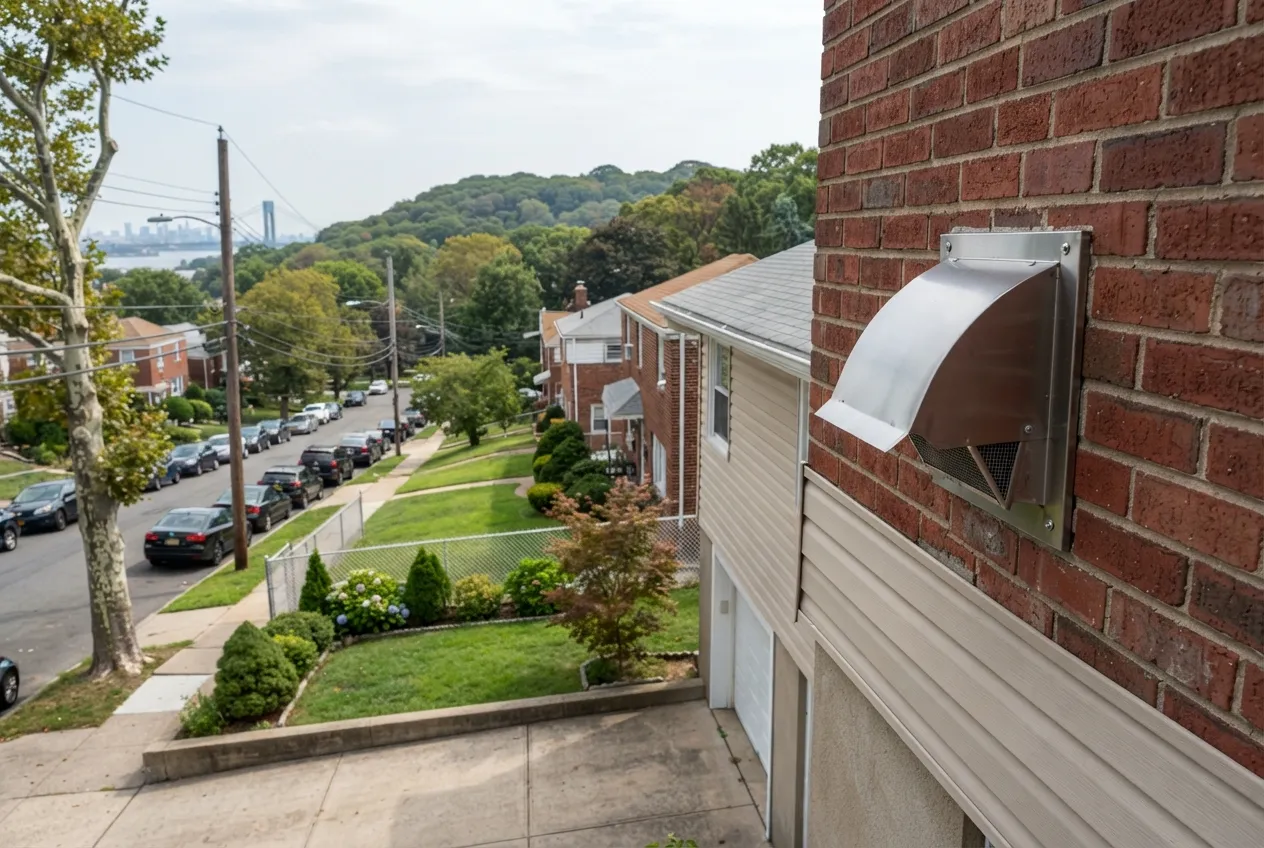
- Lint or dust blowing out around the exterior hood, or lint piled on the ground or siding beneath it.
- The flap on the outside vent barely opens, or doesn't open at all, while the dryer is running.
- Chirping, scratching or rustling near the vent, which often means birds or small animals are nesting in the duct or hood.
- Lint showing up behind the dryer, around the duct connection, or in the lint trap housing after you've cleaned the screen.
- It has been more than a year since the vent was cleaned, or you've never had it done since moving in.
What's included
A dryer vent cleaning covers the entire path the exhaust travels, not only the parts you can reach from the laundry room. Here is what a standard visit includes.
- Pulling the dryer out carefully and disconnecting the transition duct (for gas dryers, we take care not to strain the gas connection).
- Cleaning the transition duct, or noting if it's a type that should be replaced, such as thin plastic or foil.
- Brushing and vacuuming the full length of the vent run from the dryer connection to the exterior termination.
- Clearing the exterior hood or roof cap, including any lint buildup, nesting material or a stuck damper flap.
- Vacuuming the lint trap cavity and the floor area behind the dryer.
- Checking airflow at the exterior vent with the dryer running once everything is reconnected.
- A camera look inside the duct when the run is long, hidden in walls or ceilings, or still restricts airflow after cleaning.
- A plain-language rundown of what we found: crushed sections, loose joints, excessive length or bends, or a missing or damaged hood.
How the crew works inside your home and on the roof
Inside, we lay drop cloths from the entry door to the laundry area before moving anything. The dryer is slid out and protected so the floor and the appliance aren't scratched. We run a HEPA vacuum at the duct opening while rotary brushes on flexible rods work through the run. That way the lint loosened inside the duct is pulled out instead of drifting into the room. Where the vent passes through finished walls or ceilings, we use a camera to see bends, joints and any crushed spots we can't reach by hand.
Many Staten Island homes vent the dryer out a side wall or through the basement rim joist. Others, especially when the laundry is on an upper floor, run the duct up and out through the roof. For roof terminations, the technician works from a ladder and roof access suited to the pitch and height of the house. Then they clear the cap, which is often where lint and nesting material collect the most. When we're done, the dryer is reconnected, pushed back into place, and run to confirm air is moving freely out of the house.
Why dryer vent cleaning matters
Lint is light, dry and burns easily, and a dryer produces heat by design. When the vent is restricted, hot air backs up and the dryer runs longer and hotter. Lint also keeps collecting near the heat source. According to the U.S. Fire Administration, failure to clean is the leading factor contributing to clothes dryer fires in homes.
Cleaning the lint screen after every load helps, but the screen doesn't catch everything. The lint that gets past it ends up in the duct, where you can't see it or reach most of it. A clear vent also helps the dryer do its job in fewer cycles. That means less wear on the machine and less time waiting on laundry.
What affects the price
We quote after we know a few details about your setup, because no two vent runs are quite the same. These are the main factors.
- Length and path of the vent run, including the number of bends and whether it passes through finished walls, floors or ceilings.
- Where the vent ends, and height and roof access if it terminates on the roof.
- Whether the dryer is gas or electric, since gas dryers need extra care when moving and reconnecting.
- Duct material and condition, such as rigid metal, semi-rigid, or flexible foil or plastic that may need replacing.
- How much lint has built up, and whether nesting material or debris is packed in the duct or hood.
- Whether a camera inspection is needed, or repairs such as replacing a transition duct, a damaged section or an exterior hood.
How a visit works
When you reach out, we'll ask where your laundry room is, where the vent exits the house, and what you've noticed. That helps us bring the right equipment and set an appointment window. On arrival, the technician looks at the dryer connection and the outside termination before starting, and tells you what the job involves.
The cleaning itself usually takes a short part of the day for a typical house. Long runs, roof work or heavy buildup can add time. Before we leave, we walk you through what we found and show you what came out of the duct. We'll also mention anything that should be repaired or replaced. If a repair is needed, we explain the options and leave the decision to you.