
The short answer
Have your chimney swept when you see signs like a smoky or creosote smell, poor draft, or debris in the firebox, and have it inspected once a year as the NFPA 211 standard calls for. A CrestFlue sweep removes creosote and soot, checks the flue and cap, and protects your home with drop cloths and HEPA vacuums.
A fireplace or wood stove that works well one winter can start smoking, smelling, or drafting poorly the next. Most of the time the cause is buildup inside the flue: creosote from wood fires, soot from oil-fired appliances, or debris that has fallen or been carried in by animals. CrestFlue Chimney Service sweeps chimneys for homeowners on Staten Island and in nearby communities. Our certified technicians remove buildup, check the flue and its parts, and tell you plainly what they found. This page explains the signs that point to a sweep, what the visit includes, how we keep your home clean, and what affects the cost.
Signs you need a chimney sweep
Chimneys rarely fail all at once. They usually give small warnings first. If you notice any of the following, have the chimney swept and looked over before your next fire.
- A smoky or tar-like creosote smell, especially on humid days or when the air conditioning runs
- Poor draft: smoke rolls into the room, fires are hard to start, or the fire dies down quickly
- Black flakes, crumbs of brick, or bits of mortar collecting in the firebox
- White staining on the outside brick, which can mean moisture is moving through the masonry
- Scratching, chirping, or fluttering sounds from the chimney, a sign that birds or animals have moved in
- Water in the firebox or damp stains near the fireplace after rain
What is included in a chimney sweep
Every sweep follows the same checklist, so you know exactly what was done. If we find something outside the scope of a sweep, we explain it and leave the decision to you.
- Cleaning the flue from top to bottom to remove creosote, soot, and loose debris
- Cleaning the smoke chamber and smoke shelf, where buildup tends to collect
- Cleaning the firebox and removing ash and debris
- Checking the damper for proper opening, closing, and sealing
- Checking the chimney cap and spark screen for damage or blockage
- Looking over the crown, flashing, and exterior brick from the roof where it is safe to reach
- Checking for nests, animal debris, or other blockages
- A written summary of what we cleaned and what we observed, with photos where helpful
How our crew works inside your home and on the roof
Soot is fine and travels easily, so we treat the inside of your home with care. Before any brush goes into the flue, the crew lays drop cloths from the door to the fireplace and covers the hearth. We seal the fireplace opening and run a HEPA vacuum during the cleaning to capture dust as it comes loose, so it does not drift into the room.
We use rotary brushes sized to your flue. They spin against the flue walls to break up creosote and soot more thoroughly than a brush pushed up and down by hand. Where it helps, we run a camera up the flue to see the liner and joints that cannot be seen from the firebox or the top of the chimney.
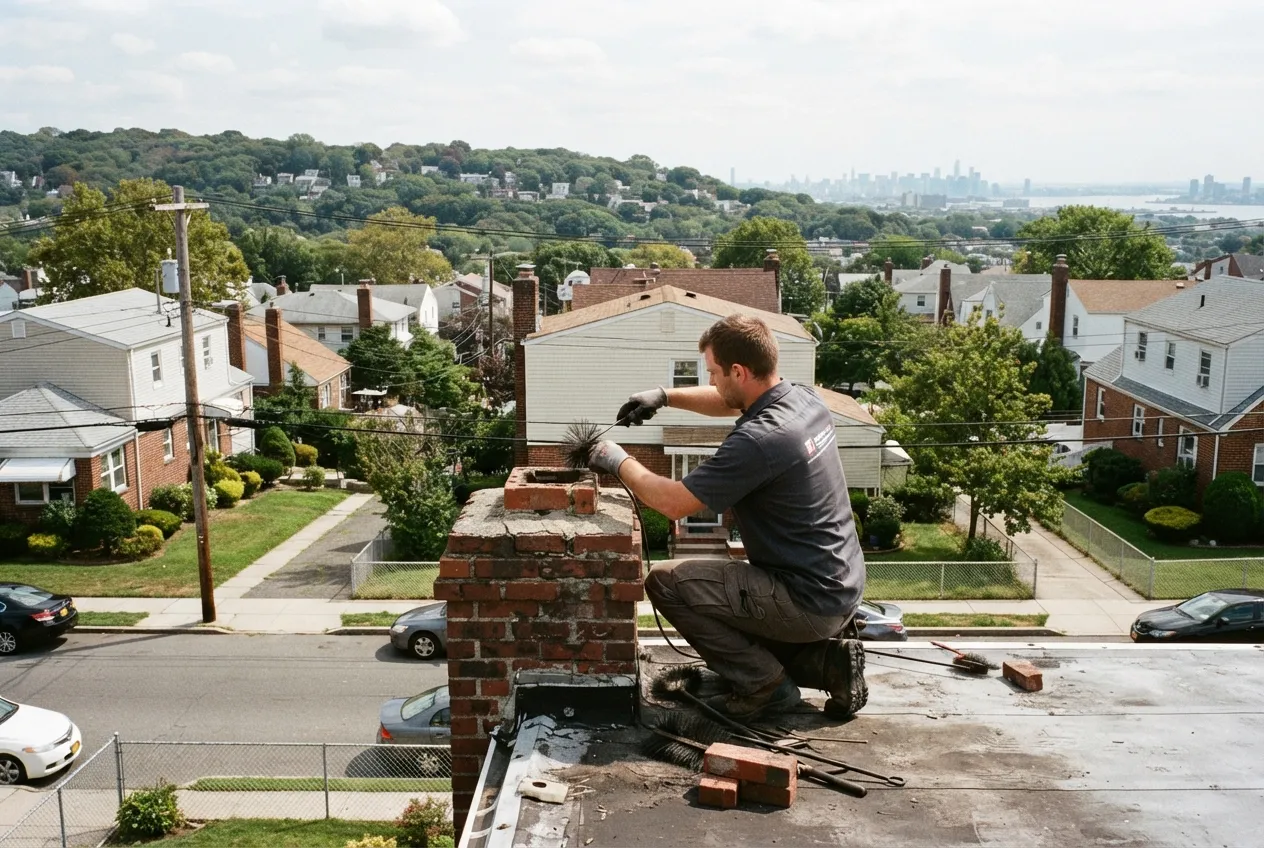
On the roof, the crew works from the top of the chimney when access is safe. That lets us check the cap, the crown, and the flashing, clear any nests or debris at the top, and finish brushing from above. If the roof is too steep or wet to work on safely, we clean from below and tell you what we could not see.
The standard we follow
We work to the NFPA 211 standard, which calls for chimneys, fireplaces, and vents to be inspected once a year. A yearly check catches buildup and damage before they become a fire or venting problem, even in a chimney you use only a few times a season.
Chimney professionals use three inspection levels. A Level 1 inspection is for a chimney where nothing has changed. It covers the readily accessible parts and is the usual match for a routine sweep. A Level 2 inspection is called for when the system changes, such as a new appliance or a switch to a different fuel, or when the home is sold. It typically includes a camera look inside the flue. A Level 3 inspection is used when a hidden hazard has to be reached by opening part of the chimney or the building, and it is only recommended when a serious problem is suspected.
If your home has switched or is switching from oil to gas heat, the chimney needs to be evaluated as part of that work. A new liner is often needed because gas exhaust produces acidic condensate that can corrode a masonry flue.
What affects the price
Every chimney is a little different, so we give you the cost before work begins. These are the main factors that shape it:
- Chimney height and roof access, including roof pitch and how many stories the crew has to climb
- Fuel type: wood, oil, or gas, since each leaves a different kind of buildup
- Flue size, shape, and condition, and whether there is more than one flue
- How much creosote or soot has built up, and whether it has hardened into a glazed layer
- Whether a camera inspection is needed to see inside the flue
- Whether any repairs come up, such as a damaged cap, crown, or liner
How a visit works
When you book, we ask a few questions about your chimney: what you burn, how often you use it, and any problems you have noticed. That helps the crew bring the right brushes and equipment. Please stop using the fireplace or stove a day before the visit so the firebox is cool when we arrive.
On the day of the visit, the technician walks through the plan with you, sets up drop cloths and the HEPA vacuum, and sweeps the chimney from the inside, the roof, or both. Afterward, we clean up the work area and go over what we found, with photos when they help. If something needs attention beyond the sweep, we explain why and what your options are. Nothing extra is done without your approval.
Many homeowners schedule a sweep in late summer or early fall, before they start lighting fires, so the chimney is ready when cold weather arrives.
Chimney Sweep by city
- Chimney Sweep in Arden HeightsLocal service & repairs
- Chimney Sweep in RossvilleLocal service & repairs
- Chimney Sweep in TottenvilleLocal service & repairs
- Chimney Sweep in CharlestonLocal service & repairs
- Chimney Sweep in AnnadaleLocal service & repairs
- Chimney Sweep in HuguenotLocal service & repairs
- Chimney Sweep in Prince’s BayLocal service & repairs
- Chimney Sweep in WoodrowLocal service & repairs
- Chimney Sweep in Great KillsLocal service & repairs
- Chimney Sweep in EltingvilleLocal service & repairs
- Chimney Sweep in New SpringvilleLocal service & repairs
- Chimney Sweep in WillowbrookLocal service & repairs