
The short answer
You likely need chimney repair if you see water or brick flakes in the firebox, white staining on the brick, or notice smoke smells and poor draft. CrestFlue inspects the full system, shows you what is damaged, and repairs masonry, crowns, flashing, caps, dampers and liners in line with the NFPA 211 standard.
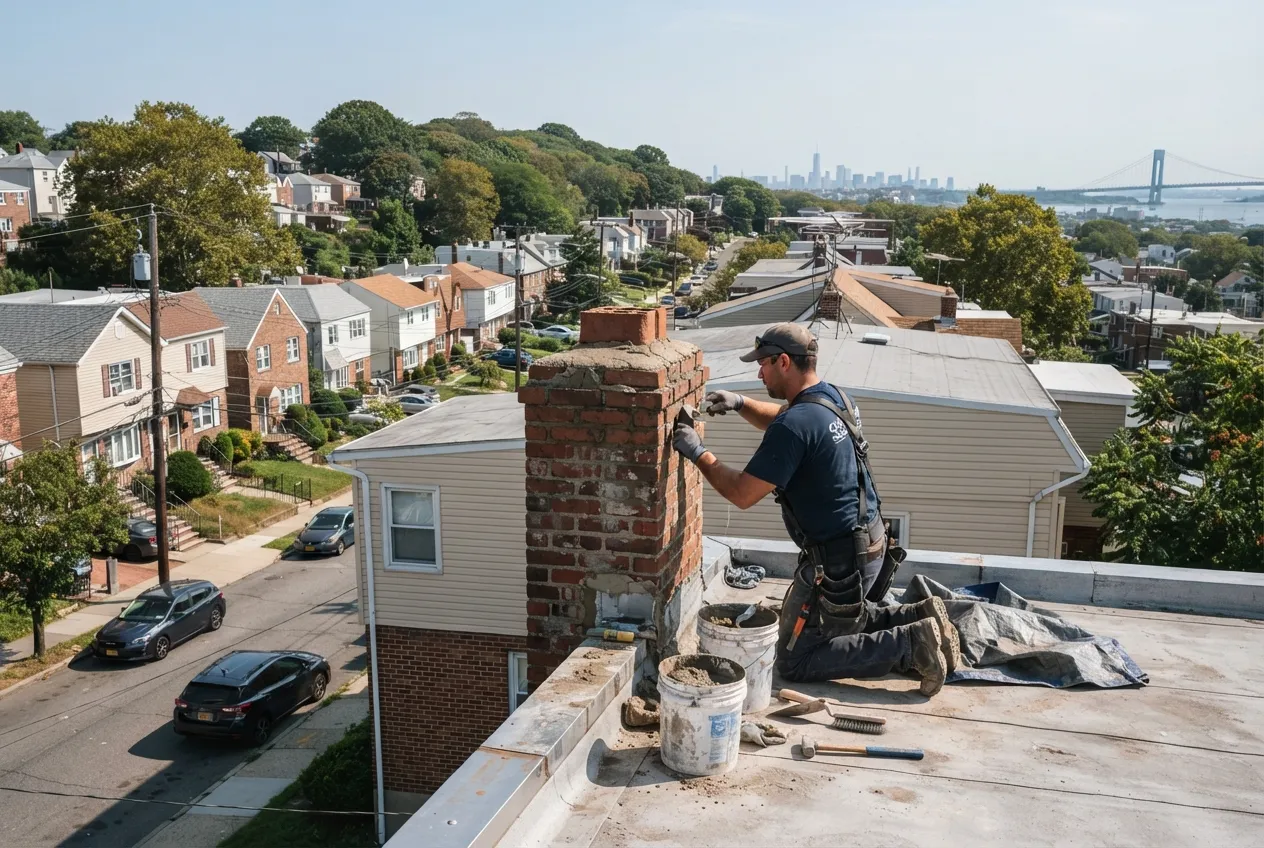
A chimney takes a beating from the outside and the inside at the same time. Rain, freeze-thaw cycles and wind wear down the crown, mortar joints and flashing on the roof, while heat, moisture and combustion byproducts work on the flue liner and firebox. Small problems tend to grow quietly: a hairline crack in the crown lets water in, the water loosens mortar, and loose mortar lets more water in. CrestFlue Chimney Service repairs chimneys for homeowners in Staten Island and nearby communities. Our certified technicians find where the damage starts, explain what they see in plain terms, and fix the cause rather than just the symptom, with the inside of your home kept clean throughout.
Signs you need it
Most chimney damage shows up first as a change you can see, smell or hear. If you notice any of the following, it is worth having the chimney looked at before the next heating season, or sooner if water is involved.
- Water, rust or damp stains in the firebox or on the damper after rain
- Brick flakes, mortar sand or chunks of tile collecting in the firebox
- White, chalky staining on the outside brick, which usually means water is moving through the masonry
- A smoky or tarry creosote smell in the room, especially on humid days
- Poor draft: smoke rolls into the room or the fire is hard to keep going
- Scratching or chirping in the chimney, a sign the cap is missing or damaged
- Cracked crown, leaning chimney, or gaps where the flashing meets the roof
What's included
Every repair visit starts with an inspection so the work matches the actual problem. We do not recommend repairs we cannot show you. Depending on what we find, a repair can include any of the items below.
- Inspection of the chimney exterior, roof connection, firebox, smoke chamber and flue
- Photos or camera footage of damage so you can see it yourself
- Repointing cracked or missing mortar joints
- Replacing spalled or broken bricks
- Crown repair or rebuild to shed water away from the flue
- Flashing repair or replacement where the chimney meets the roof
- Chimney cap installation or replacement to keep out rain and animals
- Damper repair or a top-sealing damper where the old one no longer closes
- Firebox repair with heat-rated mortar and firebrick
- Flue liner repair or relining, including liners needed after an oil-to-gas boiler conversion
- Water repellent applied to masonry where it fits the situation
- Final cleanup and a walkthrough of the finished work
How our crew works in your home and on the roof
Inside, we lay drop cloths from the door to the fireplace and seal the fireplace opening before any work begins. When the flue needs cleaning so we can see the liner clearly, we use rotary brushes run from below or above, with a HEPA vacuum running at the opening so soot stays in the chimney and out of the room. A camera lets us inspect the full length of the flue, including joints and cracks that cannot be seen with a flashlight.
On the roof, the crew sets up ladders and fall protection, checks the crown, cap, brickwork and flashing, and keeps mortar and debris off your shingles and gutters. Masonry work is scheduled around the weather so mortar and crown material can cure properly. When we finish, we clean up inside and out and show you the before-and-after photos.
The standard we follow
The NFPA 211 standard calls for chimneys, fireplaces and vents to be inspected once a year. Chimney professionals use three inspection levels. A Level 1 inspection covers the readily accessible parts of a system when nothing has changed. A Level 2 inspection is called for when the system changes, such as a new appliance or a switch of fuel, or when the home is sold. A Level 3 inspection is used when a hidden hazard has to be reached by opening part of the chimney or the building.
Fuel changes matter here. When a New York City building converts its boiler from oil to gas, the chimney has to be evaluated as part of the work, and a new liner is often needed because gas exhaust produces acidic condensate that can corrode a masonry flue. If you are planning a conversion, we can evaluate the chimney before the new boiler goes in.
What affects the price
Every chimney is different, so we quote after we have seen yours. The main factors are listed below, and we will walk you through how each one applies before any work starts.
- Chimney height, roof pitch and how safely the crew can reach the top
- Fuel type: wood, gas or oil, and whether the fuel has changed
- Flue size, liner material and current condition
- How much creosote or soot buildup has to be cleaned before inspection
- Whether a camera inspection or a Level 2 or Level 3 inspection is needed
- The type and extent of repair, from a few mortar joints to a crown rebuild or new liner
How a visit works
First, you tell us what you have noticed, such as a leak, a smell or debris in the firebox, and we schedule a visit. The technician inspects the chimney inside and out, documents the damage with photos or camera footage, and explains what is causing the problem.
You get a written scope of the recommended repairs before anything is done. Smaller fixes can often be handled the same day. Larger masonry or liner work is scheduled for a dry stretch of weather. New York City's heat season runs from October 1 through May 31, so many homeowners book repairs in late spring or summer to have the system ready before fall.
Chimney Repair by city
- Chimney Repair in Arden HeightsLocal service & repairs
- Chimney Repair in RossvilleLocal service & repairs
- Chimney Repair in TottenvilleLocal service & repairs
- Chimney Repair in CharlestonLocal service & repairs
- Chimney Repair in AnnadaleLocal service & repairs
- Chimney Repair in HuguenotLocal service & repairs
- Chimney Repair in Prince’s BayLocal service & repairs
- Chimney Repair in WoodrowLocal service & repairs
- Chimney Repair in Great KillsLocal service & repairs
- Chimney Repair in EltingvilleLocal service & repairs
- Chimney Repair in New SpringvilleLocal service & repairs
- Chimney Repair in WillowbrookLocal service & repairs