
The short answer
CrestFlue Chimney Service serves Travis, Staten Island (ZIP codes 10311 and 10314) with chimney sweeping, inspection, repair, liner installation, and dryer vent and air duct cleaning. Schedule a yearly chimney inspection, ideally before the heat season starts on October 1.
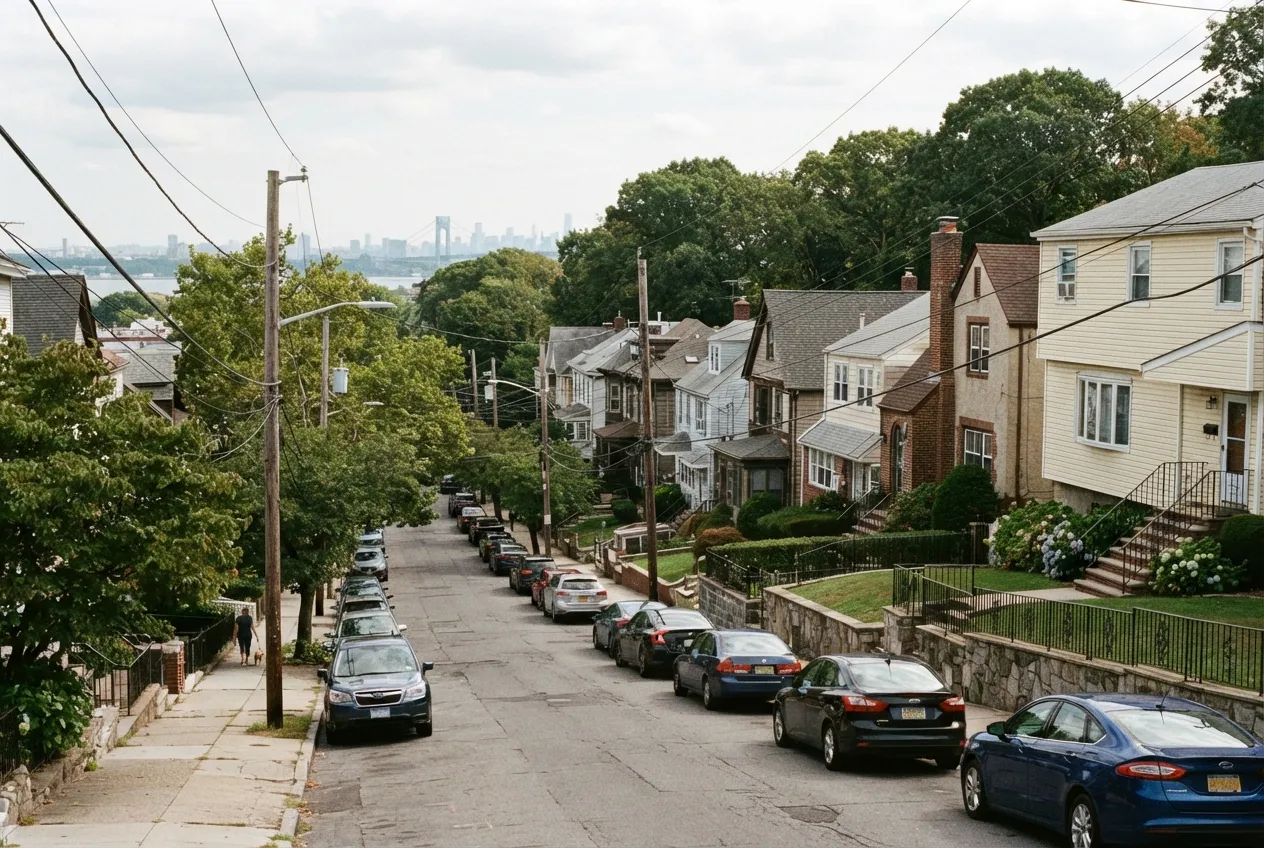
Travis is a residential neighborhood on Staten Island, and CrestFlue Chimney Service is based about 5 miles away, so homes in ZIP codes 10311 and 10314 are part of our regular service area. Most houses here are detached or semi-attached homes. Many have a masonry chimney that vents a fireplace, a boiler, or both, along with a clothes dryer vent and often forced-air ductwork. This page covers what we do in Travis, how local weather affects chimneys and vents, and how to schedule work around New York City's heat season.
Chimney, Vent and Duct Services for Travis Homes
Our certified technicians handle the full venting system of a house, from the firebox or boiler connection up to the cap. We also clean the vents and ducts that move air through your living space. We start by looking at the whole system, so a sweep can turn up a cracked crown, and a dryer vent visit can turn up a crushed duct behind the machine.
- Chimney Sweep: removing soot and creosote from fireplace and appliance flues
- Chimney Inspection: yearly checks and deeper evaluations when something changes
- Chimney Repair: crowns, flashing, mortar joints and spalled brick
- Chimney Liner Installation: new liners for boiler conversions and damaged flues
- Chimney Cap & Chase Cover: keeping out rain, animals and debris
- Chimney Waterproofing: vapor-permeable treatment for exposed masonry
- Fireplace & Damper Repair: dampers that stick, leak air or no longer seal
- Chimney Rebuilding: partial or full rebuilds when masonry is beyond repair
- Dryer Vent Cleaning: clearing lint from the full vent run
- Air Duct Cleaning: for homes with mold, pests or heavy debris in the ducts
What Staten Island Weather Does to a Chimney
Staten Island winters swing above and below freezing, often within the same week. Water that soaks into brick, mortar or a cracked crown freezes, expands and pushes the masonry apart. Over a few seasons that shows up as loose bricks, crumbling joints and flakes of brick face on the roof or in the yard.
Coastal storms and nor'easters add wind-driven rain that hits chimneys from the side. Humid summers keep damp masonry from drying out. A good cap, a sound crown or chase cover, tight flashing and a breathable waterproofing treatment are the main defenses. Fixing these early usually costs far less effort than rebuilding the top of a chimney later.
Boilers, Oil-to-Gas Conversions and Liners
Many Travis homes heat with a boiler that vents through the chimney. When a New York City building converts its boiler from oil to gas, the chimney has to be evaluated as part of that work. A new liner is often needed. Gas exhaust produces acidic condensate, and that moisture can corrode an unlined or poorly lined masonry flue from the inside.
If you are planning a conversion or replacing your heating equipment, bring us in early. We can inspect the flue, tell you whether the existing liner is suitable, and install a properly sized liner so the new appliance vents safely.
Timing Your Service Around the Heat Season
The NFPA 211 standard calls for chimneys, fireplaces and vents to be inspected once a year. A Level 1 inspection covers a system where nothing has changed. A Level 2 inspection applies when you change the system, such as adding a new appliance or switching fuel, and when a home is sold. A Level 3 inspection is used when a hidden hazard can only be reached by opening part of the chimney or building.
New York City's heat season runs from October 1 through May 31. Building owners in that period must keep apartments heated to the city's minimum temperatures. If you rent out part of a two-family house, your boiler and chimney need to be ready before October. Late summer and early fall are the best times to book an inspection, so any repairs can be finished before you depend on the heat.
Dryer Vents and Air Ducts
According to the U.S. Fire Administration, failure to clean is the leading factor contributing to clothes dryer fires in homes. Long vent runs, flexible foil ducts and vents that exit through a basement wall all collect lint quickly. If drying times are getting longer or the laundry area feels hot, have the vent checked.
For air ducts, we follow the same guidance the U.S. EPA gives homeowners. Cleaning makes sense when there is substantial visible mold growth, vermin, or excessive dust and debris. The EPA also notes that duct cleaning has not been shown to prevent health problems. It advises researching any company before responding to very cheap advertised offers, and being careful with chemical treatments. We will tell you plainly whether your ducts need cleaning.
ZIP codes we serve
- 10311
- 10314