
The short answer
CrestFlue Chimney Service repairs chimney crowns, brick and mortar, flashing, caps, dampers and flue liners for Rossville homes. We inspect first, explain what is causing the problem, and repair it before it turns into a leak, a draft problem or a fire hazard.
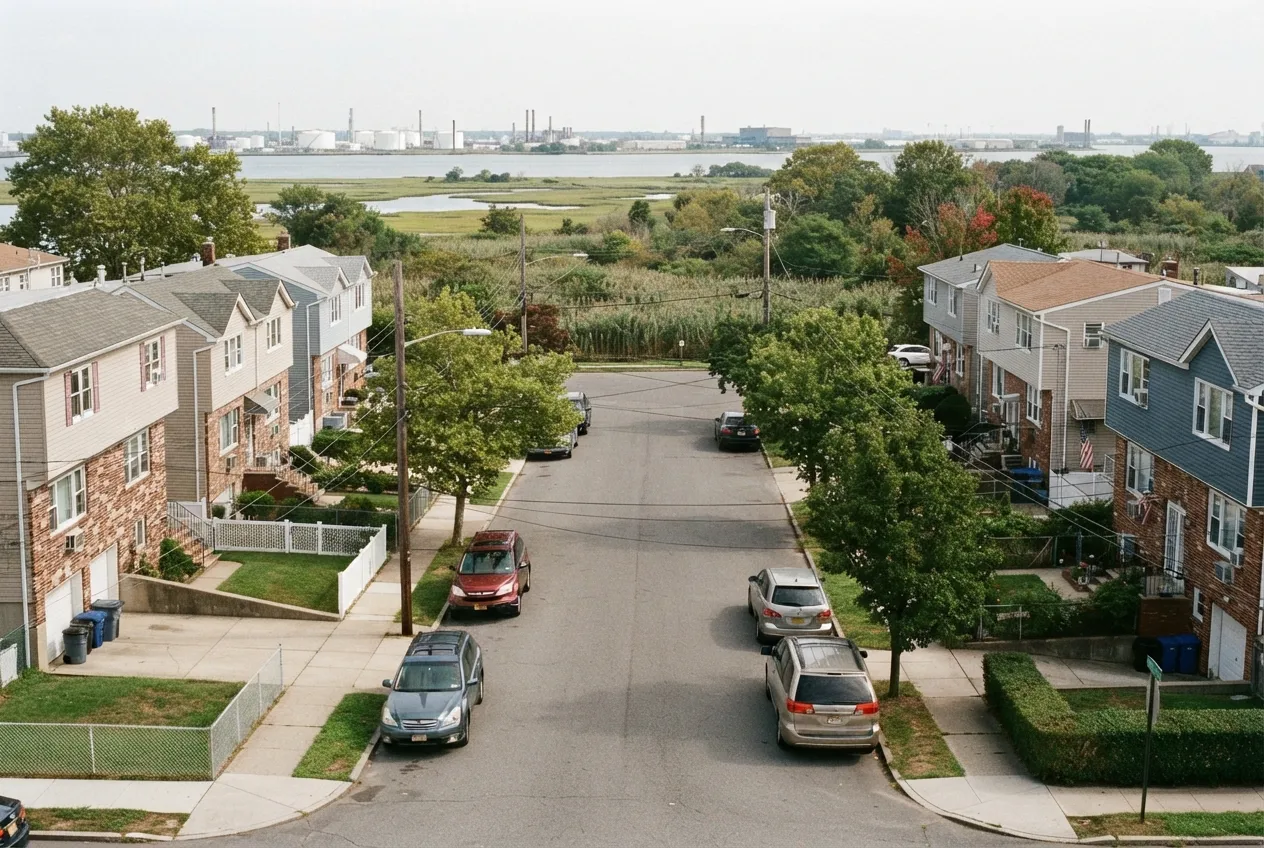
Most Rossville homes are detached or semi-detached houses and townhouses with a brick or block chimney serving a fireplace, a boiler, a furnace, or a water heater. These chimneys take the full weather on Staten Island's South Shore: wind-driven rain, snow sitting on the crown, and repeated freezing and thawing through the winter. CrestFlue Chimney Service repairs chimneys in Rossville, about two miles from our office, and in nearby Arden Heights, Annadale, Huguenot, Prince's Bay and Woodrow. Our certified technicians find where the damage started and fix that cause, not just the symptom you can see from the yard.
Common Chimney Problems in Rossville Homes
Water causes most of the chimney damage we see. It gets into brick and mortar, freezes, expands, and slowly pushes the masonry apart. On a typical Rossville house the chimney runs up an exterior wall or through the roof, so it gets wet from more than one side.
Homeowners usually call us after noticing one of these signs:
- Cracked or crumbling concrete crown at the top of the chimney
- Brick faces flaking or popping off (spalling)
- Mortar joints that are recessed, sandy or missing
- Water stains on the ceiling or wall next to the chimney, especially after storms
- White staining (efflorescence) on the brick
- A rusted, loose or missing chimney cap
- A damper that sticks, won't seal, or has rusted through
- Pieces of tile or masonry falling into the firebox or the cleanout
The Repairs We Handle
Crown repair or replacement: small cracks in a sound crown can be sealed. A crown that is broken through or poorly built is rebuilt so it sheds water away from the brick.
Repointing and brick replacement: we grind out failed mortar and pack in new mortar, and we replace bricks that have spalled. If the top of the chimney has deteriorated badly, a partial rebuild above the roofline is often the most sensible fix.
Flashing repair: where the chimney meets the roof, failed or poorly sealed flashing is a frequent source of leaks that get blamed on the roof. We reseal or replace it.
Caps, dampers and liners: a properly fitted cap keeps out rain, animals and debris. We repair or replace damaged dampers, and we repair or reline flues with cracked tiles, gaps or corrosion.
Oil-to-Gas Conversions and Liner Repairs
Some Staten Island homes have switched or are planning to switch their heating from oil to gas. When a New York City building converts its boiler from oil to gas, the chimney has to be evaluated as part of the work. A new liner is often needed because gas exhaust produces acidic condensate that can corrode a masonry flue that was built for oil.
Under the NFPA 211 standard, a change like this calls for a Level 2 inspection, the same level that applies when a home is sold. If you are converting, replacing a boiler or water heater, or buying or selling a house in Rossville, have the chimney checked before the new equipment goes in, not after a problem appears.
How a Repair Visit Works
We start with an inspection. NFPA 211 calls for chimneys, fireplaces and vents to be inspected once a year. When nothing about the system has changed, a Level 1 inspection is usually enough. If we suspect a hidden problem that can only be reached by opening part of the chimney or the building, we will explain why a Level 3 inspection is needed before anything is opened.
After the inspection we show you what we found, usually with photos from the roof and inside the flue, and we explain which repairs are urgent and which can be planned. You decide what gets done. We protect the area around the fireplace or appliance while we work and clean up when we are finished.
Timing Repairs Around the Heating Season
New York City's heat season runs from October 1 through May 31. If you own a two-family house or rent out part of your home, the heat has to stay on through those months, so a chimney serving the boiler can't be out of service for long. Masonry work also goes best in mild, dry weather. For both reasons, late spring through early fall is the best time to schedule crown work, repointing and relining. Leaks and safety problems shouldn't wait, so call us when you see them in any season.
More services in Rossville
- Chimney Sweep in RossvilleLocal service & repairs
- Chimney Inspection in RossvilleLocal service & repairs
- Air Duct Cleaning in RossvilleLocal service & repairs
- Chimney Liner Installation in RossvilleLocal service & repairs