
The short answer
A chimney sweep removes creosote, soot and debris from your fireplace or heating flue and checks it for damage. The NFPA 211 standard calls for chimneys, fireplaces and vents to be inspected once a year, so most Eltingville homeowners should book an inspection annually and have the chimney swept when it needs it, ideally before the heating months.
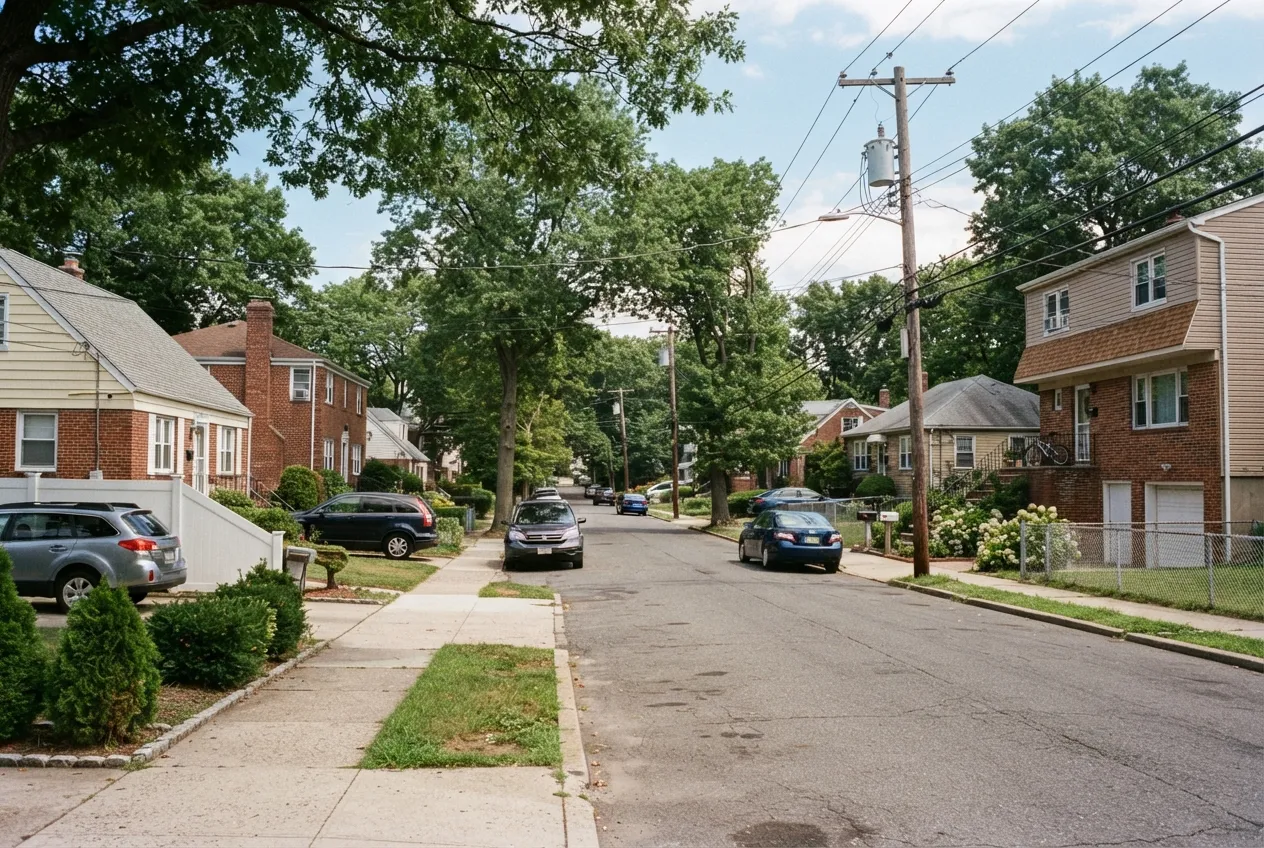
Most Eltingville homes are detached or semi-attached houses, along with plenty of two-family homes. Many have a wood-burning fireplace in the living room and a separate flue in the basement for the boiler or water heater. Both need attention. CrestFlue Chimney Service sends certified technicians from our Staten Island office, about 4 miles west, to sweep chimneys throughout the 10308 ZIP code. We remove creosote and soot, clear blockages, and tell you plainly what we see inside the flue so you can use your fireplace and heating equipment with confidence.
What a Chimney Sweep Covers in Eltingville Homes
A sweep is more than running a brush up the flue. In a typical Eltingville house we may be working on two different systems: a masonry fireplace chimney that sees fires on winter weekends, and an appliance flue that vents a gas or oil boiler every day of the heating season. Each one builds up different deposits and fails in different ways.
Wood fires leave creosote, a tar-like residue that coats the flue walls and can ignite if it gets thick enough. Oil-fired equipment leaves soot and scale that can narrow the flue and hurt draft. Gas appliances burn cleaner, but their flues can still collect debris, nesting material and flakes of deteriorating masonry. We adjust our tools and methods to the type of flue and the fuel you burn.
What Happens During a Visit
We protect your floors and furniture before starting, and we keep dust contained with drop cloths and a high-powered vacuum. A typical sweep includes:
- Checking the firebox, damper and smoke chamber before cleaning
- Brushing the flue from top to bottom to remove creosote, soot and loose debris
- Clearing animal nests, leaves or fallen masonry from the flue and smoke shelf
- Looking at the chimney cap, crown and flashing for damage that lets water in
- Examining the liner for cracks, gaps or corrosion where we can see it
- Explaining what we found and recommending next steps, if any
When to Schedule a Sweep
The NFPA 211 standard calls for chimneys, fireplaces and vents to be inspected once a year. Chimney professionals use three inspection levels. Level 1 applies when nothing about the system has changed. Level 2 applies when something changes, such as a new appliance or a switch of fuel, or when the home is sold. Level 3 applies when a suspected hazard is hidden and can only be reached by opening part of the chimney or building. Most Eltingville homeowners need a Level 1 inspection along with a sweep when buildup calls for it.
Late summer and early fall are the easiest times to book, before the first cold snap. If you own a two-family home and rent out the other unit, keep in mind that New York City's heat season runs from October 1 through May 31. During that time, building owners must keep apartments heated to the city's minimum temperatures. A boiler flue that is blocked or failing in January is a much bigger problem than one caught in September.
Oil-to-Gas Conversions and Chimney Liners
Many Staten Island homes have switched or are considering switching their boilers from oil to gas. When a New York City building converts from oil to gas, the chimney has to be evaluated as part of the work. A new liner is often needed because gas exhaust produces acidic condensate that can corrode a masonry flue.
If you are planning a conversion, or have already converted and never had the chimney looked at, a sweep and inspection is a sensible first step. We can tell you what condition the existing flue is in and whether relining should be part of the project. A change of fuel is also one of the situations that calls for a Level 2 inspection.
Signs Your Chimney Needs Attention Now
You do not have to wait for your yearly appointment if something seems off. Call us sooner if you notice:
- Smoke drifting into the room instead of going up the flue
- A strong campfire or musty odor from the fireplace, especially in humid weather
- Black, flaky or shiny tar-like deposits inside the firebox or on the damper
- Chirping, scratching or debris falling into the fireplace
- Water stains on walls or ceilings near the chimney
- White staining or crumbling brick on the outside of the chimney
Serving Eltingville and Nearby Neighborhoods
Along with Eltingville, our technicians regularly work in Great Kills, Arden Heights, Rossville, Annadale and Huguenot. The housing in these South Shore neighborhoods is similar, with mostly detached and semi-attached homes, so the chimney issues we see are much the same from one street to the next. Whether you burn wood on winter weekends or simply need your boiler flue kept clear, we will clean it thoroughly and give you a straight answer about its condition.
More services in Eltingville
- Chimney Inspection in EltingvilleLocal service & repairs
- Chimney Repair in EltingvilleLocal service & repairs
- Air Duct Cleaning in EltingvilleLocal service & repairs
- Chimney Liner Installation in EltingvilleLocal service & repairs