
The short answer
If your Great Kills chimney has crumbling mortar, flaking brick, a cracked crown, leaks or loose flue tiles, it needs a repair before the next heating season. CrestFlue Chimney Service inspects the chimney, explains what is wrong and why, and repairs the masonry, liner, cap, crown or flashing as needed.
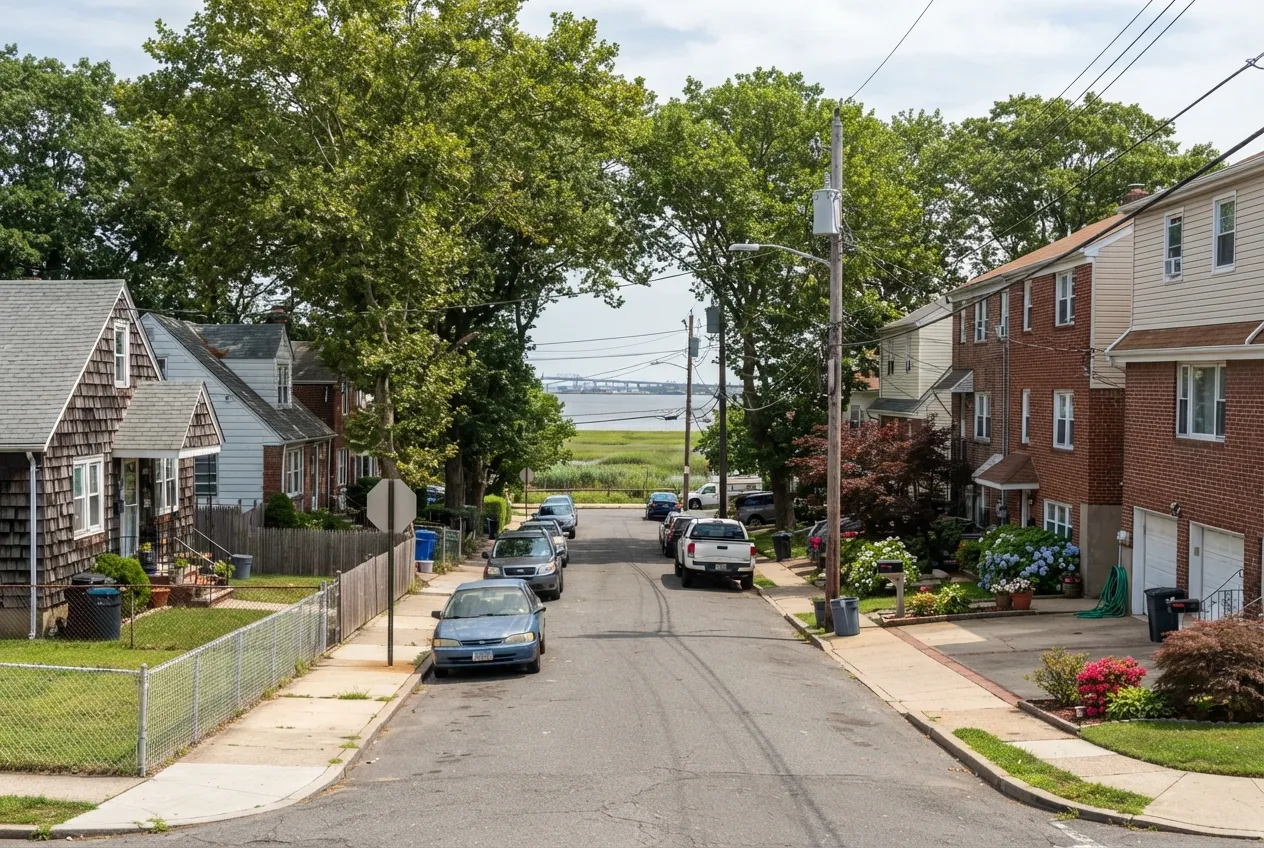
Most homes in Great Kills are detached or semi-attached houses, and many of them have a masonry chimney venting a fireplace, an oil or gas boiler, or both. Over time, freeze-thaw winters, wind-driven rain and acidic exhaust wear down brick, mortar, crowns and flue liners. CrestFlue Chimney Service repairs chimneys throughout Great Kills (ZIP 10308) from our Staten Island office, about 4 miles away. Our certified technicians start every job by finding out why the damage happened, so the repair fixes the cause and not just the part you can see.
Signs Your Chimney Needs Repair
Chimney damage usually starts small and gets worse each winter. Water gets into a hairline crack, freezes, expands and opens the crack wider. By the time a leak shows up inside, the masonry above the roof has often been taking on water for a while. Call us if you notice any of these:
- Mortar joints that are crumbling, recessed or missing
- Brick faces that are flaking or popping off (spalling)
- A cracked or broken crown on top of the chimney
- A rusted, loose or missing chimney cap
- Water stains, peeling paint or a damp smell on walls or ceilings near the chimney
- Pieces of clay tile or masonry in the firebox, cleanout or boiler connection
- White, chalky staining on the brick, which is a sign of moisture moving through it
Chimney Repairs We Handle in Great Kills
Every chimney is different, so we recommend repairs based on what we find. That could be repointing a few courses near the roofline, or relining a flue that no longer vents safely. Common repairs for Great Kills homes include:
- Repointing: grinding out failed mortar and replacing it
- Partial rebuilds of chimney sections above the roofline
- Crown repair or replacement to shed water away from the brick
- Chimney caps to keep out rain, animals and debris
- Flashing repair where the chimney meets the roof
- Flue liner repair and relining for fireplaces and heating appliances
- Firebox and smoke chamber repairs
- Damper repair or replacement
- Water-repellent treatment for masonry after repairs are complete
Liners and Oil-to-Gas Conversions
Many Staten Island homes have switched, or are thinking about switching, their boiler from oil to gas. When a New York City building makes that conversion, the chimney has to be evaluated as part of the work. A new liner is often needed because gas exhaust produces acidic condensate that can corrode a masonry flue from the inside. That damage is easy to miss until tiles start breaking or the flue stops drafting properly.
If you are planning a conversion, or one was done and the chimney was never checked, we can inspect the flue and tell you whether a liner sized for the new appliance is needed.
How We Diagnose the Problem First
The NFPA 211 standard calls for chimneys, fireplaces and vents to be inspected once a year. Chimney professionals use three inspection levels. Level 1 is for systems where nothing has changed. Level 2 applies when the system changes, such as a new appliance or a switch of fuel, or when the home is sold. Level 3 is for cases where a hidden hazard can only be reached by opening part of the chimney or building.
Before we recommend a repair, we look at the chimney inside and out, including the crown, cap, flashing, masonry and flue. Then we explain what we found, show you photos where we can, and walk you through your options. You decide what gets done.
Plan Repairs Before Heat Season
New York City's heat season runs from October 1 through May 31. During those months, owners must keep apartments heated to the city's minimum temperatures, and most homeowners rely on their boiler every day. A chimney problem found in January is harder to fix on short notice. Scheduling repairs in spring or summer gives masonry work time to cure and means your heating system is ready before the cold arrives.
More services in Great Kills
- Chimney Sweep in Great KillsLocal service & repairs
- Chimney Inspection in Great KillsLocal service & repairs
- Air Duct Cleaning in Great KillsLocal service & repairs
- Chimney Liner Installation in Great KillsLocal service & repairs