
The short answer
The NFPA 211 standard calls for chimneys, fireplaces and vents to be inspected once a year. In Huguenot, most homes need a routine Level 1 inspection. A Level 2 inspection is needed when you buy or sell a home, add or replace an appliance, or switch fuels such as oil to gas.
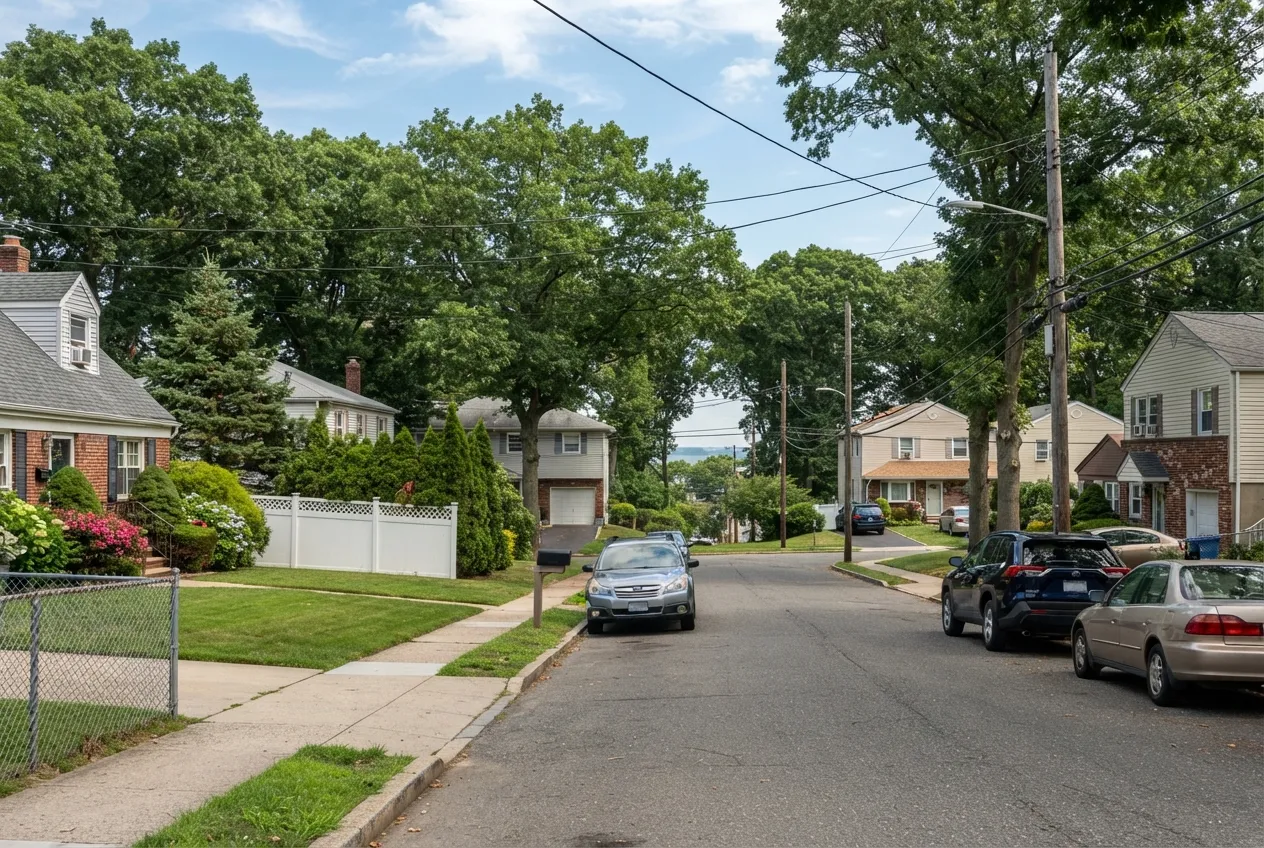
Most Huguenot homes are detached or semi-detached houses with a fireplace, a furnace or boiler flue, or both. A flue can look fine from the yard and still have cracked tiles, a gap at the liner joints, or a nest blocking the top. CrestFlue Chimney Service inspects chimneys across Huguenot, ZIP codes 10309 and 10312, about 2 miles southeast of our Staten Island office. Our certified technicians check the whole system, from the firebox or appliance connection up to the crown and cap. You get a clear account of what we found, photos where they help, and plain advice on what needs attention now and what can wait.
What we check on a Huguenot chimney
Many South Shore homes have a masonry chimney serving a fireplace and a separate flue venting a gas or oil heating system. Others have a factory-built fireplace with a metal chimney inside a framed chase. Each type wears differently, so we adjust the inspection to the system in front of us.
On a masonry chimney we look at the firebox, damper, smoke chamber and flue lining. Outside, we check the brick and mortar joints, the crown and the flashing where the chimney meets the roof. On a metal system we check the pipe sections, joints, supports and required clearances to wood framing. For heating appliances we look at the connector pipe, the draft and any signs of rust, water staining or condensate damage.
Which inspection level your home needs
The NFPA 211 standard sets out three inspection levels. We tell you which one fits your situation before we start, and we do not recommend a deeper level unless there is a real reason for it.
- Level 1: The standard yearly inspection when nothing about the system has changed. We examine the readily accessible parts of the chimney, the appliance and the connections.
- Level 2: Needed when the system changes, such as a new furnace, boiler, stove or insert, or a switch of fuel. It is also called for when a home is sold. It includes the attic, crawl spaces and roof areas, plus a video scan of the flue interior.
- Level 3: Used only when a serious hazard is suspected and the only way to reach it is to open part of the chimney or the surrounding wall. We explain why before any work like this is considered.
Oil-to-gas conversions and flue liners
Some Huguenot homeowners convert their heating from oil to gas. When a New York City building switches its boiler from oil to gas, the chimney must be evaluated as part of the job. Gas exhaust produces acidic condensate, and over time that moisture can eat into the clay tiles and mortar of a masonry flue. That is why a new liner is often needed.
If you are planning a conversion, or already finished one without a chimney check, a Level 2 inspection shows whether your existing flue is suitable. It also shows whether a properly sized liner should be installed. Getting this answered early helps you avoid surprises once the new equipment is running.
Timing your inspection around the heating season
New York City's heat season runs from October 1 through May 31. Furnaces and boilers work hardest during these months, and fireplaces see the most use. A cracked flue or a blocked cap is far easier to deal with before cold weather sets in than in the middle of January.
For most Huguenot homes, late spring through early fall is a practical window. It leaves time to schedule any repairs before you need heat. If you notice smoke backing up, a strong odor, or water stains near the chimney at any time of year, don't wait for your usual date. Book an inspection.
What to expect during the visit
We protect the floor and the area around the fireplace or appliance before starting. Most Level 1 inspections are straightforward and are done in a single visit. Level 2 inspections take longer because of the camera scan and the additional areas we access.
Before we leave, we go over the results with you in person.
- The condition of the flue, liner, damper, crown, cap and flashing
- Any creosote buildup and whether it is heavy enough to need a sweep
- Blockages from debris, nests or fallen masonry
- Problems ranked by urgency, separating safety issues from routine maintenance
- Photos or video stills where they make a problem easier to see
More services in Huguenot
- Chimney Sweep in HuguenotLocal service & repairs
- Chimney Repair in HuguenotLocal service & repairs
- Air Duct Cleaning in HuguenotLocal service & repairs
- Chimney Liner Installation in HuguenotLocal service & repairs