
The short answer
CrestFlue Chimney Service repairs chimney masonry, crowns, flashing, caps, and flue liners for Huguenot homes in ZIP codes 10309 and 10312. Every job starts with an inspection so the repair addresses the cause of the problem, not just the visible symptom.
A chimney takes weather from every direction, and small problems rarely stay small. A loose brick, a cracked crown, or a gap in the flashing can let water into the masonry, where freeze-thaw cycles keep widening the damage each winter. CrestFlue Chimney Service repairs chimneys for homeowners in Huguenot, about 2 miles southeast of our Staten Island office, and in the surrounding 10309 and 10312 ZIP codes. Our certified technicians inspect the whole system first, explain what they find in plain terms, and then repair what actually needs fixing.
Chimney problems we see in Huguenot homes
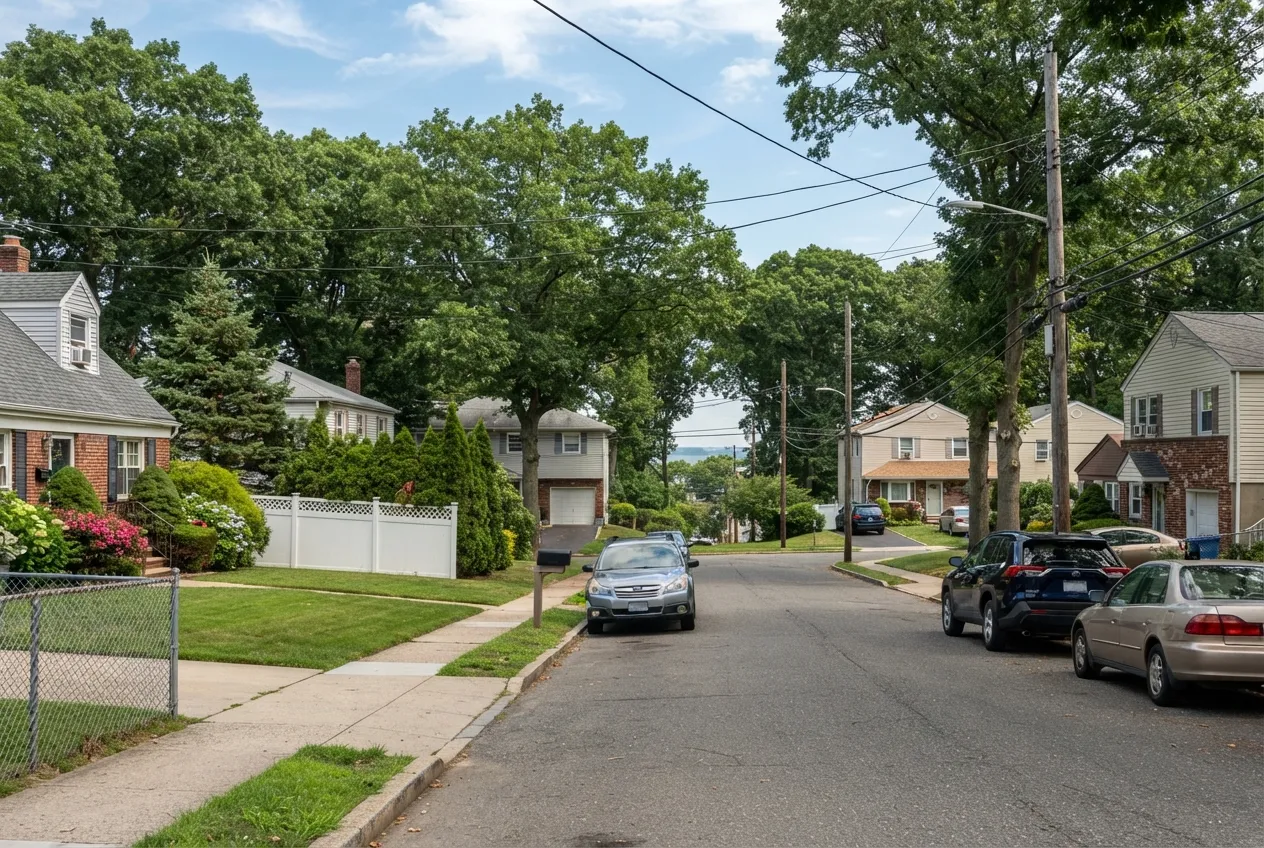
Huguenot is mostly detached homes, with a mix of older houses and newer construction, along with some attached and semi-detached homes. Many have a masonry chimney serving a fireplace, a boiler or furnace, or both. Because these chimneys stand above the roofline in open exposure, wind-driven rain and repeated freezing and thawing are the main forces wearing them down.
On older homes, mortar joints that have eroded over decades are common. On newer homes, we often find a crown that was poured too thin or without an overhang, or flashing that was never sealed well where the chimney meets the roof. Either way, the repair has to stop water from getting in.
- Cracked, spalling, or loose bricks
- Eroded or missing mortar joints (repointing)
- Cracked or crumbling chimney crowns
- Leaking flashing at the roofline
- Missing or damaged chimney caps and screens
- Cracked, deteriorated, or undersized flue liners
- Damper problems and smoke chamber deterioration
How a repair visit works
We start by inspecting the chimney from the roof, the attic where accessible, and the fireplace or appliance connection inside. The NFPA 211 standard calls for chimneys, fireplaces, and vents to be inspected once a year, and it describes three levels of inspection. A Level 1 inspection fits when nothing about the system has changed. A Level 2 inspection applies when the system changes, such as a new appliance or a switch of fuel, or when the home is being sold. A Level 3 inspection is used when a suspected hidden hazard can only be reached by opening part of the chimney or building.
After the inspection, we walk you through what we found, show you photos where they help, and lay out which repairs are urgent and which can be planned. We then schedule the work, protect your roof and interior while we work, and clean up when we finish.
Liner repairs and oil-to-gas conversions
The flue liner protects the masonry from heat and exhaust. When a liner cracks or deteriorates, combustion gases and heat can reach parts of the chimney and house they were never meant to touch. We repair or replace damaged liners and size new liners to match the appliance they serve.
This matters most when a home's heating system changes. When a boiler is converted from oil to gas in New York City, the chimney has to be evaluated as part of the work. A new liner is often needed, because gas exhaust produces acidic condensate that can corrode a masonry flue. If you are planning a conversion, have the chimney checked early so the liner work fits into the project schedule instead of holding it up.
Timing your repair before the heating season
New York City's heat season runs from October 1 through May 31. For homeowners who rely on a boiler or furnace vented through a masonry chimney, that means the chimney is working hard for most of the year. The months before October are the best time to handle repairs, since masonry work goes best in mild, dry weather and you avoid being without heat while a flue is out of service.
If you notice water stains near the chimney, flakes of tile or brick in the fireplace, white staining on the outside bricks, or a smell of smoke or exhaust indoors, schedule an inspection rather than waiting for the season to change.
Serving Huguenot and nearby neighborhoods
Our technicians work throughout Huguenot and the nearby South Shore neighborhoods of Annadale, Prince's Bay, Woodrow, Arden Heights, and Rossville. Whether your chimney needs a few bricks repointed or a full liner replacement, we will explain the options clearly and do the work carefully.
More services in Huguenot
- Chimney Sweep in HuguenotLocal service & repairs
- Chimney Inspection in HuguenotLocal service & repairs
- Air Duct Cleaning in HuguenotLocal service & repairs
- Chimney Liner Installation in HuguenotLocal service & repairs