
The short answer
A chimney sweep in Huguenot removes soot, creosote and debris from your flue and checks the chimney's condition while it's clean. The NFPA 211 standard calls for a yearly inspection, and the best time is before heating season starts on October 1.
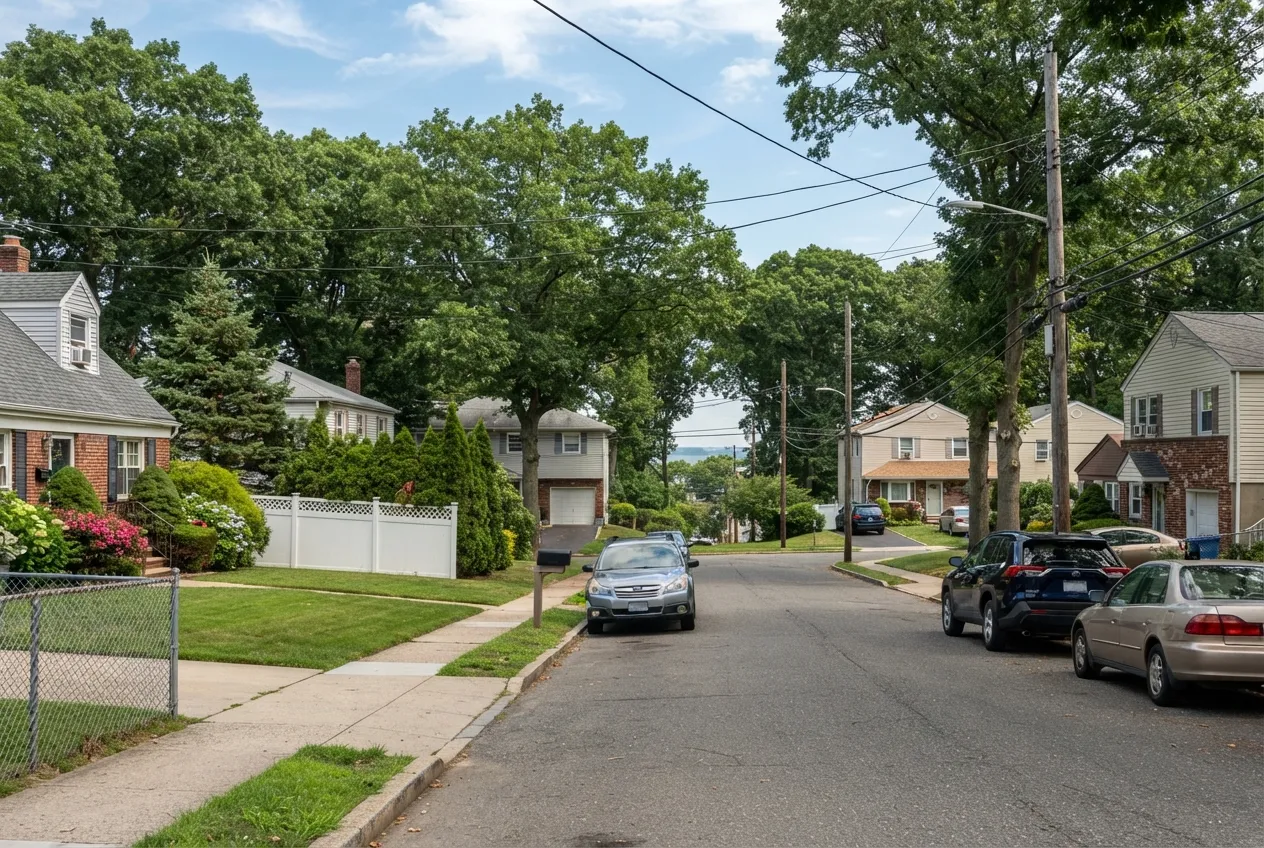
CrestFlue Chimney Service sweeps chimneys for homeowners in Huguenot, about 2 miles southeast of our Staten Island office. Huguenot is mostly detached houses, with some semi-attached homes and townhouses. Many have a wood-burning fireplace, a gas insert, or a flue that vents a boiler or water heater. A sweep removes the soot and creosote that build up inside these flues and gives our certified technicians a clear look at the liner, damper and crown. That lets you go into the heating season knowing what shape your chimney is in.
What a Sweep Covers for a Huguenot Home
A sweep is more than running a brush up the flue. In a typical Huguenot house, the chimney may serve a fireplace in the living room and a separate flue for the boiler or furnace in the basement. Each flue gets cleaned and looked at on its own, because each one builds up deposits in a different way.
Wood fires leave creosote, a tar-like residue that can ignite if it gets thick enough. Oil-fired equipment leaves soot and scale. Gas appliances burn cleaner, but their flues can still collect debris, nests or crumbling mortar that blocks the exhaust path. We clean what's there and tell you plainly what we found.
Detached Homes and Their Chimneys
Most Huguenot homes are detached or semi-attached houses with exterior masonry chimneys. Some were built with open fireplaces. Others have had gas logs or inserts added over the years. Chimneys on the outside wall face more weather, so the crown, flashing and upper brickwork deserve attention along with the inside of the flue.
Homes near the water on the South Shore get wind-driven rain and damp air. Moisture that gets into a chimney can wear down mortar joints and rust dampers. During a sweep we check for signs of water entry, like staining, loose mortar or a missing chimney cap. That way a small problem can be handled before it becomes a larger repair.
When to Schedule: Yearly Inspections and the Heat Season
The NFPA 211 standard calls for chimneys, fireplaces and vents to be inspected once a year. A sweep is often done at the same visit, so the technician can see the flue walls clearly.
Professionals use three inspection levels. Level 1 is the routine yearly check when nothing about the system has changed. Level 2 applies when something changes, such as a new appliance or a switch of fuel, or when the home is being sold. Level 3 is used only when a hidden hazard has to be reached by opening part of the chimney or building.
New York City's heat season runs from October 1 through May 31. Booking your sweep in late summer or early fall means your boiler and fireplace are ready before you rely on them every day.
Converting From Oil to Gas
Some Huguenot homes still heat with oil, and owners who switch to gas need to plan for the chimney. When a New York City building converts its boiler from oil to gas, the chimney has to be evaluated as part of the work. A new liner is often needed. Gas exhaust produces acidic condensate that can corrode a masonry flue that was fine for oil.
A sweep before the conversion clears out years of oil soot. It also lets us assess the flue so you know whether relining is likely to be part of the project.
What to Expect on the Day
Our technicians work to keep your home clean and walk you through what they see. Here is how a typical visit goes:
- Drop cloths and covers go down around the fireplace or appliance area before work starts.
- Each flue is brushed and vacuumed to remove soot, creosote and loose debris.
- The damper, smoke chamber, firebox and liner are checked for cracks, gaps or damage.
- Exterior parts like the crown, cap and flashing are looked at for wear and water entry.
- You get a plain explanation of the chimney's condition and any repairs worth considering.
More services in Huguenot
- Chimney Inspection in HuguenotLocal service & repairs
- Chimney Repair in HuguenotLocal service & repairs
- Air Duct Cleaning in HuguenotLocal service & repairs
- Chimney Liner Installation in HuguenotLocal service & repairs